


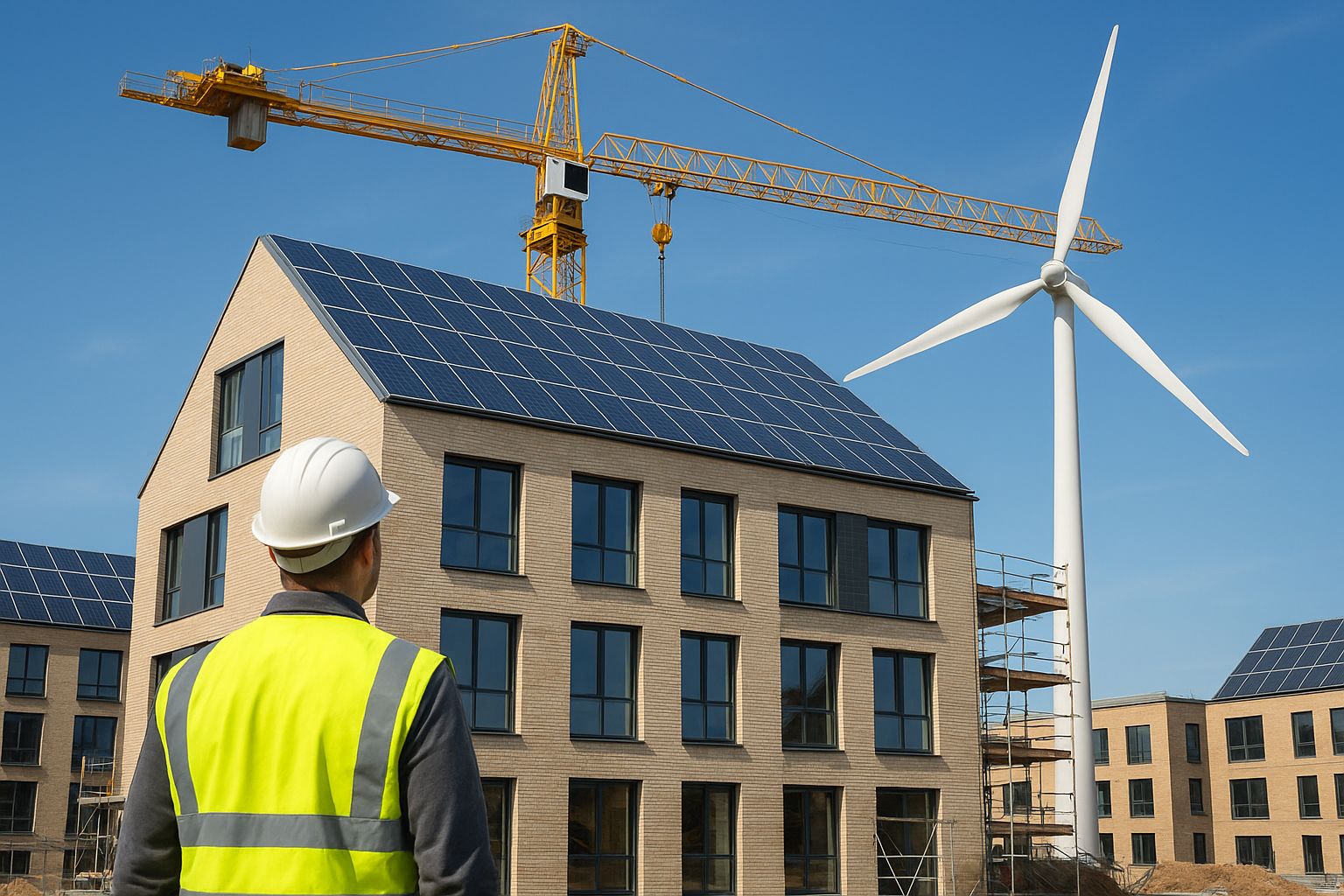
The construction industry in recent years has witnessed a remarkable shift towards sustainability. With environmental concerns becoming more pressing, companies are now embracing eco-friendly practices not only as a regulatory requirement but as a competitive advantage.
A key trend reshaping the industry is the movement towards net-zero buildings, structures that consume as much energy as they produce through renewable sources. With the global building stock predicted to double by 2050, according to the World Green Building Council, the push for net-zero energy buildings is timely and necessary. Leading firms are incorporating solar panels, wind turbines, and advanced energy management systems into their designs.
In major projects across Europe and North America, there’s been an increase in retrofitting existing buildings with energy-efficient technologies. Retrofitting has proven to be a cost-effective method of reducing carbon emissions while improving building performance. Major cities like New York now offer incentives for buildings that achieve certain energy standards, further spurring progress.
Green certifications like LEED (Leadership in Energy and Environmental Design) have also gained prominence. They’ve become a benchmark for measuring a building’s sustainability credentials, helping developers market their projects to environmentally-conscious buyers. Leading the pack, South Korea recently reported a surge in LEED-certified projects, driven by both governmental and private sector initiatives.
Material innovations play a crucial role. The introduction of cross-laminated timber and recycled materials is reducing the carbon footprint of new structures. Notably, the world’s tallest wooden building, located in Norway and completed earlier this year, exemplifies the use of such sustainable materials, combining formidable engineering with environmental stewardship.
Stakeholders are noticing that sustainability efforts directly impact bottom lines. Consumers now prefer businesses exhibiting corporate responsibility, aligning values with business practices. This strategic advantage is driving firms to act beyond mere compliance, aiming for brand loyalty and a favorable public image.
As the construction industry moves forward, collaboration among architects, engineers, and construction firms is imperative to overcome challenges in standardizing practices across regions. The collective goal is to meet global sustainability targets and restore ecological balance, capitalizing on technological advancements and market demands.

