


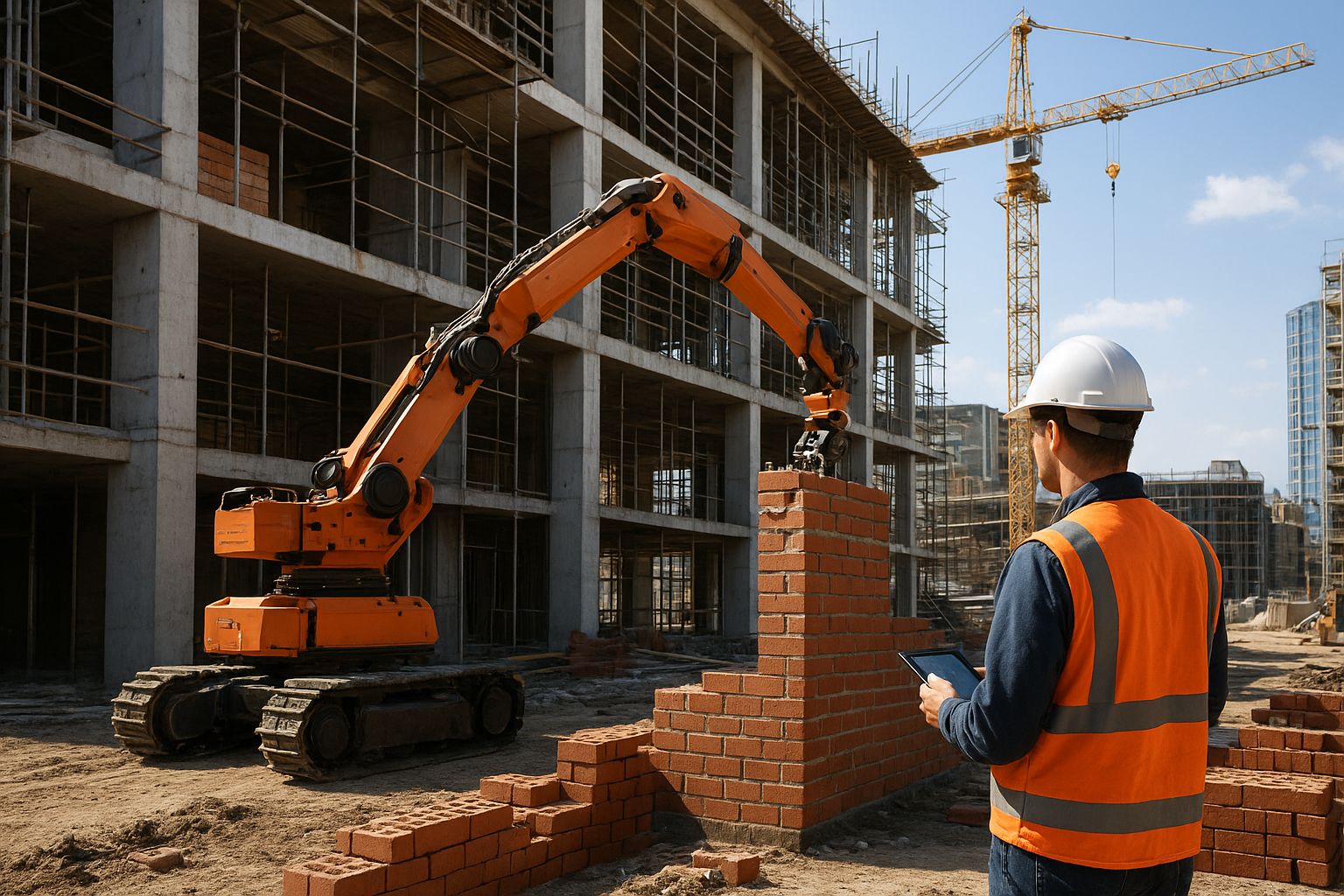
As the construction industry faces amplified pressures to complete projects more efficiently and cost-effectively, robotics and artificial intelligence (AI) are emerging as game-changing technologies. These innovations are not only revolutionizing construction methodologies but are also redefining project management, compliance, and safety protocols, creating an exhilarating shift across the sector.
Recent reports indicate that investment in construction technology has surged significantly. An integral part of this transformation is the deployment of robotics, which can perform tasks ranging from bricklaying to entire assembly line processes autonomously. This remarkable leap is exemplified by recent projects like the in-progress automated skyscrapers in Tokyo, where robots handle much of the repetitive construction work, leaving skilled workers to focus on more complex tasks, reducing human error, and enhancing productivity.
The integration of AI further complements these efforts by providing detailed analytics and real-time data interpretation which are indispensable for decision-makers aiming to streamline operations. The use of predictive analysis via AI aids in efficient project planning and management by simulating outcomes, optimizing resources, and forecasting potential delays or issues.
Enhancing safety remains a top priority, and this is where AI-driven systems are proving their worth by monitoring sites for compliance and hazardous conditions. With AI, autonomous drones and surveillance can continually scan job sites, offering invaluable insights to minimize accidents and ensure conformity with stringent regulations.
Despite the promising future of robotics and AI in advancing construction, the sector faces significant challenges, particularly regarding skills and training. Workers are now required to adapt to new technology-driven roles, making upskilling an essential part of the industry’s evolution. Proactive companies are investing in training programs, ensuring their workforce is equipped to leverage these groundbreaking technologies fully.
One notable example is the use of AI by a leading U.S.-based construction firm, which has implemented intelligent project management software that integrates with their enterprise resource planning (ERP) systems for enhanced efficiency. This integration enables seamless collaboration between stakeholders, streamlining processes, and ensuring that projects stay on time and within budget, despite their complexity.
As construction projects grow more intricate and ambitious, the trend towards digital transformation facilitated by robotics and AI technology is likely to continue. However, the successful adoption of these technologies relies heavily on the industry’s ability to strategically navigate regulatory frameworks, train its workforce, and engage in thoughtful planning and execution.
The construction industry is on the brink of a technological renaissance, paving the way for unprecedented growth and innovation. Embracing these advancements will not only cater to the rising demand but will also set new standards in sustainability, efficiency, and safety.

