


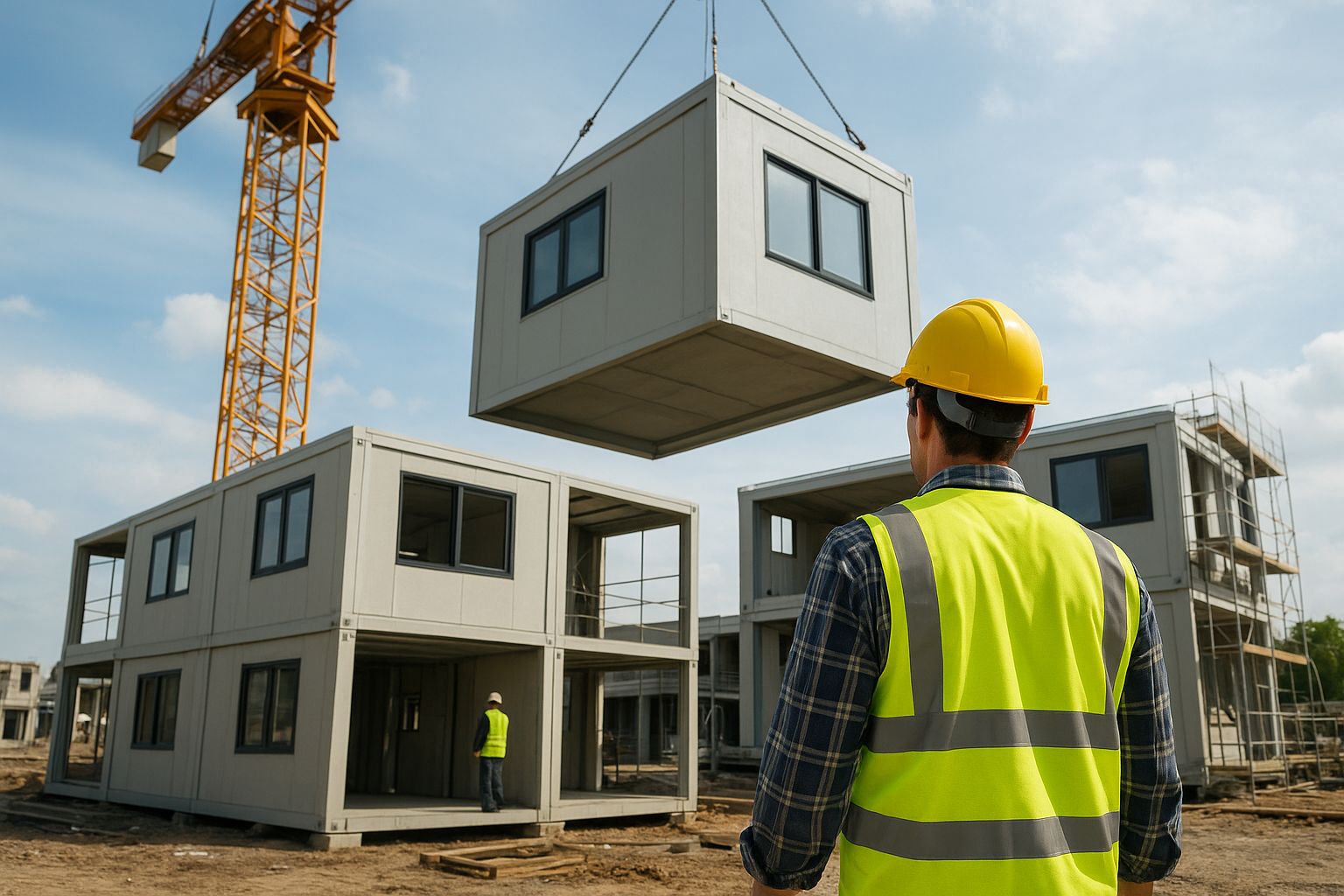
The construction industry, long known for its traditional methods and resistance to rapid change, is experiencing a seismic shift as modular construction rises to prominence. This transformation is being driven by several critical factors including cost efficiency, shorter project timelines, and increasing emphasis on sustainability.
Modular construction, which entails off-site manufacturing of building components delivered and assembled on-site, offers a solution to the industry’s perennial challenges. Among these challenges are the growing skills gap, heightened material costs, and project delays exacerbated by global supply chain disruptions.
Recent reports highlight that the global modular construction market is projected to grow phenomenally over the next few years. This trend is driven by demand from sectors such as healthcare and residential real estate, where quick, scalable construction solutions are imperative. Companies like Katerra, which offers fully integrated building systems, are at the forefront, implementing innovative techniques that promise to redefine how buildings are conceived and delivered.
Another contributing factor to the rise of modular construction is its alignment with sustainability agendas. Modular projects typically generate less waste compared to their traditional counterparts. This is achieved by optimizing resources and reducing the carbon footprint associated with transportation of materials and labor. With the construction industry under pressure to meet stricter environmental standards, adopting modular methods helps firms align with regulatory compliance and stakeholder expectations.
From a financial perspective, modular construction presents compelling advantages. The predictability it offers in terms of cost and time frames allows for better financial planning and fewer surprises. Major firms in the construction sector are now investing in R&D to further enhance modular solutions’ flexibility and integrate advanced technology like AI and the Internet of Things to monitor quality and efficiency in real time.
Key players in the industry are forging new paths by collaborating with tech firms to harness big data, improving project outcomes through predictive analytics. These collaborations focus on mitigating risks, enhancing productivity, and reducing overheads, thus generating greater investment returns while maintaining high-quality output.
The disruption caused by the ongoing pandemic has further underscored the need for agile construction solutions. Modular construction provides a robust response to these disruptions, offering a means to overcome logistic challenges posed by social distancing mandates, and labor shortages, as it requires fewer on-site workers.
In conclusion, modular construction represents a pivotal shift for an industry seeking to overcome hurdles and meet modern demands. Its ability to address various stakeholders’ needs makes it a compelling choice for future-proofing construction projects. As firms continue to recover and adapt post-pandemic, embracing modular methods could very well define their path to sustainable success.

