


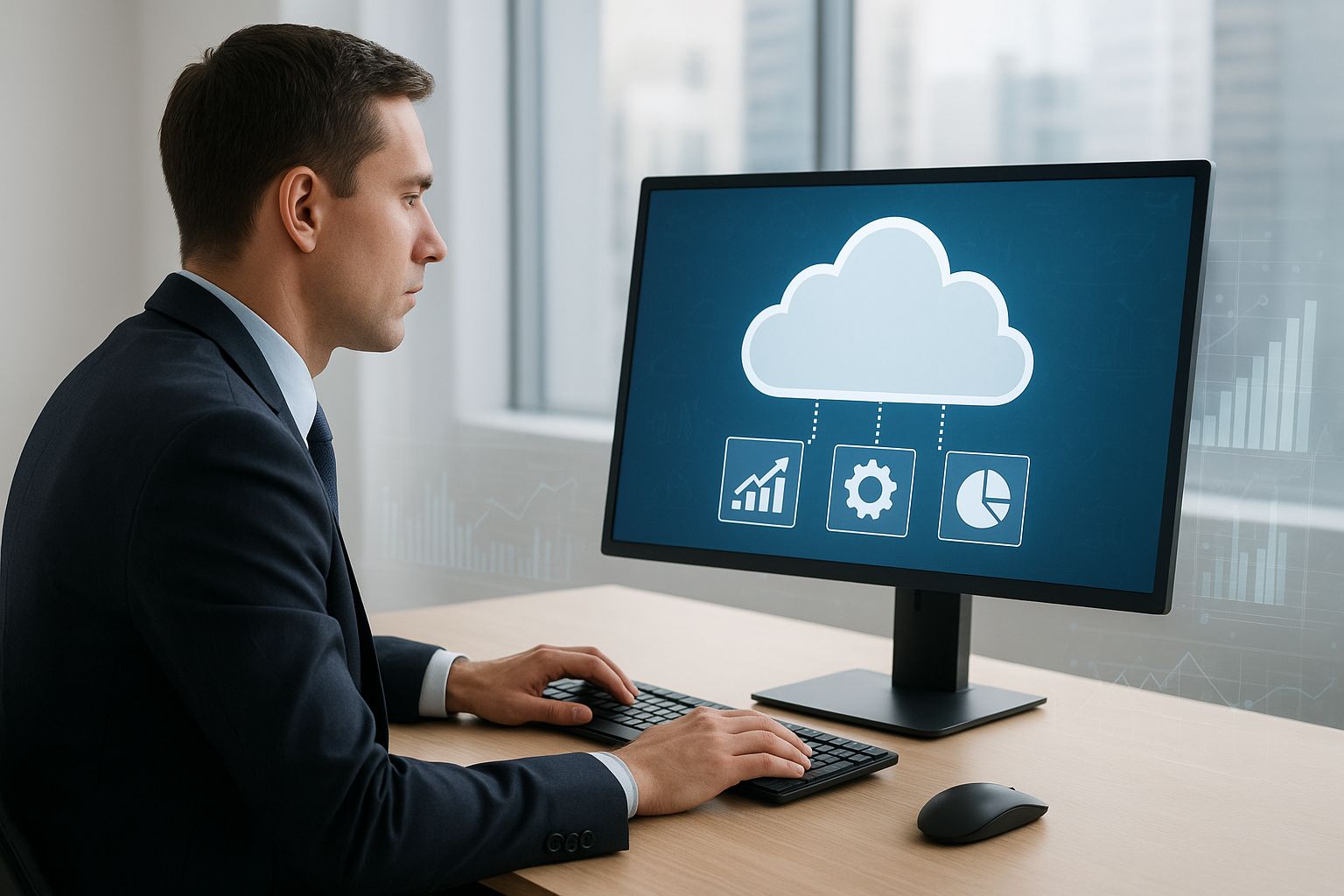
The rise of cloud computing continues to redefine how businesses operate, facilitating a significant shift towards cloud-based ERP systems. This trend has surged as organizations aim to enhance operational efficiency, reduce costs, and stay competitive in an increasingly digital world. ERP systems, traditionally on-premises, are finding new momentum as they migrate to the cloud, offering businesses unparalleled flexibility and scalability.
A recent study by Gartner highlights that by the end of 2023, over 85% of enterprises will have shifted some ERP functions to the cloud. The driving force behind this movement is the robust capability of these systems in providing real-time data access and improving decision-making processes. In this digital age, real-time analytics become crucial for adaptive strategy formulation and informed decision-making.
Case studies from industry frontrunners resonate with the advantages of cloud-based ERP adoption. A notable example is Michelin, which transitioned to a cloud ERP solution to unify its various legacy systems scattered across global offices. The outcome was a remarkable 20% cut in operational costs and a streamlined supply chain process, enhancing its responsiveness to market changes.
On the other hand, transitioning to a cloud-based ERP isn’t without challenges. Businesses must contend with data security concerns, compliance requirements, and potential downtime during migration. However, the benefits, as demonstrated by Michelin and others, outweigh these hurdles when managed with comprehensive planning and robust security frameworks.
The software-as-a-service (SaaS) model further complements the migration to the cloud. It allows businesses, particularly SMEs, to access sophisticated ERP systems without the heavy upfront investment of traditional systems. This is democratizing technology, enabling smaller firms to leverage tools that were once the preserve of larger corporations.
In conclusion, cloud-based ERP systems are no longer a mere option but a strategic imperative for businesses aiming to thrive in the current digital era. The agility, cost-effectiveness, and data-driven capabilities they offer are reshaping industries, positioning companies strategically to tackle future challenges.
Embracing this technology requires a forward-thinking approach, readiness to innovate, and alignment of organizational goals with digital transformation strategies. As cloud computing continues to evolve, businesses that integrate these technologies are poised not just to survive but to lead in the future landscape.

